By Charles Drummond, CEO, AviusULD
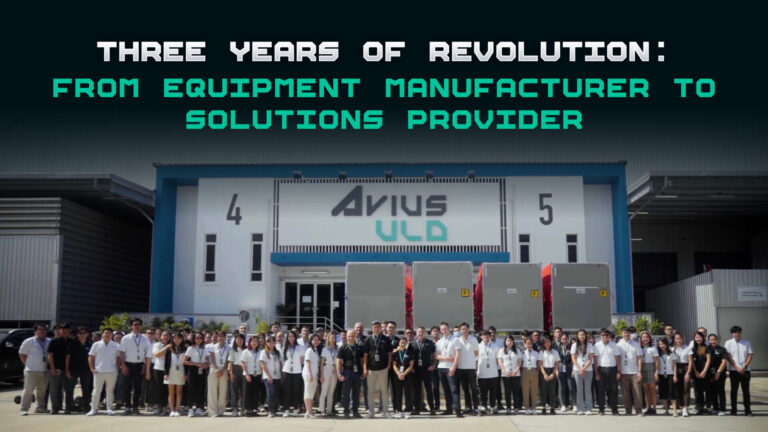
On Friday evening, the factory still carried the old brand identity.
By Monday morning, we were AviusULD.
Over one weekend in June 2023, the signs, colours and name changed across our whole production facility.
The people, products and engineering experience remained.
What changed was our freedom to determine our own destiny.
We had spent years inside a major multinational with interests extending far beyond ULDs. Our business was respected, but it was one specialist operation within a much larger organisation.
Now, as AviusULD, we could set our own priorities, move at our own speed and build the company around the needs of airlines and ULD operators.
We set ourselves a bold North Star: to revolutionize the ULD industry.
The goal went beyond better products or a more efficient factory. We wanted to change how the business operated and help modernize the industry.
Instead of simply manufacturing and delivering equipment, we would become a long-term cargo solutions partner. That meant combining products, data, services and specialist expertise to solve more of the customer’s operational problems long after the initial purchase.
We have now changed how AviusULD operates. We accelerated product development, challenged established methods and made continuous improvement part of daily operations, giving our teams greater ownership of the results.
But a revolution cannot be driven from behind factory walls. We needed to listen more closely to the challenges airlines faced, communicate our thinking more openly and involve customers earlier in developing the next generation of products.
As we celebrate our third anniversary, this is the story so far.
A new company built on 50 years of innovation
AviusULD was a new name, not a new engineering business. Behind it stood more than 50 years of ULD experience and more than 700,000 units delivered.
ULDs are the containers and pallets that move passenger baggage and cargo through global air freight networks. They carry everything from suitcases and parcels to medicines, fresh food, electronics and high-value goods.
We were building on solid foundations and a history of engineering innovation. In 1987, our predecessors introduced the first non-welded container. In 2001 came the first certified collapsible AKE container. The following decades brought new pallet and container designs, a modular approach to main-deck containers in 2016, an ergonomic door system in 2017 and the introduction of a fire-resistant container in 2018.
Independence gave us the opportunity to bring customers and engineering even closer together. ULD decisions were now made inside a company focused entirely on ULDs. A problem raised by an airline could move more quickly into R&D, product development, certification and production, with customer insight reaching engineering earlier in the process.
This is how we want AviusULD to operate as a trusted long-term partner. Our value is not simply in manufacturing a certified product. It is in combining customer knowledge with engineering excellence to develop solutions around the way airlines actually work.
Our job now is to take more than 50 years of engineering innovation and make it relevant to the next 50: lighter and more sustainable products, connected ULDs, better visibility, earlier warning of safety risks and solutions built around the changing needs of customers.
Revolutionizing how we operate
Before changing the industry, we needed to change ourselves.
Over several months, teams from across the business took part in workshops to identify what made us different, what we wanted to preserve and what needed to change. The result was a shared mission, vision and set of values. Customer focus, innovation, excellence, integrity and teamwork would guide how we operated. Our vision set a larger target: to revolutionize the global ULD industry through customer experience, innovation and continuous improvement.
That vision needed to become more than a statement on a wall. We needed a disciplined operating system that could translate long-term ambition into daily action across the business.
Working with Kaizen Institute, we developed AviusULD Ascend. Its goals were to improve quality, reduce waste, strengthen delivery performance, accelerate innovation, give employees greater ownership and create a better customer experience.
Ascend connects strategy to daily execution. Long-term priorities are translated into annual objectives, accountable owners, measurable actions and deadlines. Teams use Lean Six Sigma, visual management, standardized work, gemba walks and root-cause problem-solving to expose issues, test solutions and prevent the same problems from returning.
It also changes how people interact with the business. Problems are made visible rather than hidden. Responsibility is clear. The people closest to the work are expected to identify improvements, contribute ideas and take ownership of the result. Ultimately, innovation is driven by people. Our greatest transformation has been creating a culture where every employee is empowered to improve the business every day.
Today, we run AviusULD through Ascend. It shapes how we work across production, engineering, commercial activity, digital development, after-sales support and customer delivery. Continuous improvement is not a project operating alongside the business. It is the system through which the business operates.
Ascend’s successful implementation earned recognition at both national and global level. In 2025, AviusULD won the Excellence in Breakthrough Transformation award at the KAIZEN Awards Thailand, before placing third at the Global KAIZEN Award in Madrid.
The awards recognized a revolution in how we operate: how strategy becomes action, how teams solve problems and how employees participate in continuous improvement. In aviation, change only counts if it can be repeated through certification, production, delivery and years of daily use. Ascend gives us the discipline to do that.
Revolutionizing the ULD through digital technology
Ascend gave us the discipline to change how we worked. Closer customer relationships showed us where to apply it. Airlines needed lower lifetime costs, better visibility across global networks and earlier warning of risks that traditional equipment could not detect.
Much of the ULD sector remained analogue. We saw the opportunity to modernize it without compromising the engineering discipline and reliability aviation demands.
Ascend changed how we ran AviusULD. SmartULD changed what a ULD could be.
Before becoming CEO of AviusULD, I had spent years on the customer side of ULD management. I knew how much time and money could disappear because an airline could not see its own equipment.
A conventional ULD is a passive physical asset. It carries baggage or cargo, protects the load and meets demanding aviation requirements. But once it enters a global airline network, it cannot tell the operator where it is, whether it is empty, how it has been used or whether a risk is developing inside it.
Teams search warehouses. Containers accumulate in the wrong location. Empty units are repositioned unnecessarily. Airlines buy or lease additional ULDs because they cannot trust the visibility of the fleet. Damage appears without a reliable record of where it occurred.
Better visibility allows airlines to make more effective use of the equipment they already have, reducing buffer stock and the need to lease additional ULDs to cover temporary shortages.
We asked a more fundamental question: what if the ULD could report for itself?
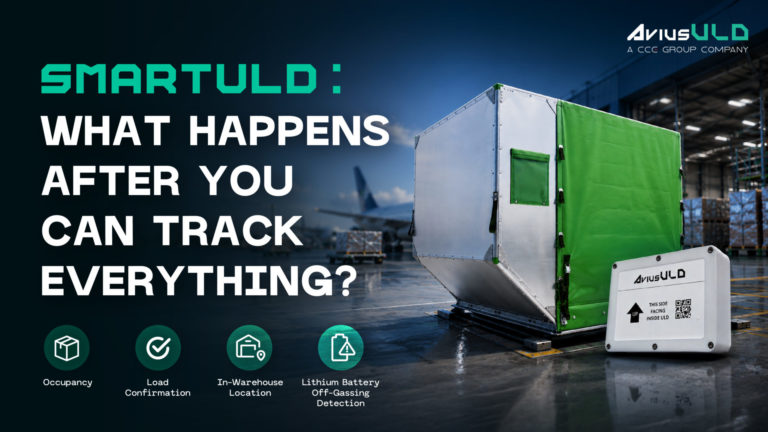
Developed with eloc8, SmartULD is the world’s first kinetically powered infrastructure-free ULD tracking system. The device harvests energy from the normal movement of the container and communicates directly through existing cellular networks. Outdoor and indoor positioning technologies allow it to report from airports, warehouses, freight-forwarder facilities and other locations without requiring readers or gateways to be installed at every site. The tracking system travels with the asset.
We later extended the same principle to pallets through the SmartULD Pallet Tag. The self-powered tracker helps airlines locate and manage pallets across the network, including when they are stacked for storage or repositioning.
Removing the dependence on fixed infrastructure and routine battery replacement was the first breakthrough. It meant airlines could deploy the technology across an international network without building another international network simply to support it.
The next breakthrough was scale. We have now delivered 30,000 SmartULD devices, with another 20,000 pallet tags ordered. The technology has visited 600 airports across 122 countries and mapped more than 7,000 off-airport locations.
The data platform has scaled with it, processing more than 100 million messages in six months. That matters because the long-term value of SmartULD goes beyond knowing where a container is. As the network grows, the data can help airlines understand how equipment moves, how it is used and where operational problems are emerging.
But location was only the beginning.
Occupancy sensing can show whether a container is empty and how efficiently its internal space is being used. Load confirmation can help identify whether equipment has been placed on the correct aircraft and in the correct position. Indoor positioning helps teams find assets inside large warehouses. Environmental sensors can monitor conditions around the load. Fire Tags detect gases associated with lithium-ion battery off-gassing, giving operators earlier warning of a developing risk.
The same underlying fire-detection technology has since been adapted for aircraft overhead bins. In 2026, the Smart Cabin Fire Tag won the Crystal Cabin Award in the Cabin Technologies category, demonstrating that the technology could solve safety problems beyond the original cargo application.
SmartULD also changes what happens after the product has been delivered. Through the AviusConnect platform, operators can use geofences, configurable alerts, movement histories, heat maps and connections to their own control towers and planning systems. Over-the-air updates allow capabilities to develop without replacing equipment already moving through the network. As the dataset grows, it can support better stock forecasting, utilisation planning and investigation of damage or loss.
By always knowing where equipment is and how it is being used, airlines can also reduce excess buffer stock and their reliance on short-term leasing to cover avoidable gaps.
Ascend made continuous improvement into the system through which AviusULD operates. SmartULD applies the same principle to our core product. The ULD is no longer simply manufactured, certified and delivered. It becomes a connected part of the airline operation, capable of reporting what is happening around it and gaining new capabilities throughout its working life. We remain involved after it leaves the factory, helping customers manage its location, use, condition and safety for years after delivery.
Revolutionizing ULD sustainability
Sustainability has become central to how we define a better ULD.
For us, sustainability cannot be separated from engineering or economics. A ULD may remain in service for years. During that time it is carried on aircraft, handled thousands of times, repaired, stored and repositioned across a global network. The environmental impact of the product is therefore determined by its whole working life.
This changes the engineering question. We need to reduce the resources consumed every time the ULD flies, every time it is handled and every time it needs to be repaired or repositioned.
Weight is one of the clearest examples. The Endumax AKE lower-deck container was developed around a cost airlines carry on every flight: fuel. At 51 kilograms, it is 14 kilograms lighter than the traditional aluminium comparison used in our modelling. Fourteen kilograms sounds modest beside the weight of an aircraft, but it becomes significant when the same container is carried through a global network for years.
Our lifecycle assessment, conducted in accordance with ISO 14040 and ISO 14044, measured the total carbon footprint of an AKE across its full lifecycle, from raw materials and manufacturing to use and final disposal. More than 99 per cent of that footprint came from the aircraft fuel required to carry the container throughout its working life. Manufacturing and end-of-life represented less than one per cent.
That finding changes the sustainability conversation. Reducing weight reduces fuel consumption, operating cost and emissions every time the container flies. Better environmental performance and better economics can come from the same engineering decision.
Our approach extends beyond weight. A durable ULD remains in service longer. Fewer repairs reduce labour, spare parts, transport and waste. A product that can be repaired quickly returns to service sooner, reducing downtime and the number of spare assets needed to support the operation.
The collapsible AKE addresses another form of waste. Airline networks are rarely balanced. Empty containers accumulate at one station while another faces a shortage. Returning them occupies space that could otherwise carry baggage or revenue cargo.
Our collapsible design can be prepared without tools and allows up to 14 empty units to be stacked on one pallet. That reduces storage requirements, simplifies ground handling and makes empty equipment far more efficient to reposition across the network.
This product-level work sits within a broader approach to sustainability. In December 2025, AviusULD received an EcoVadis Gold Medal, placing us among the top 5 per cent of organisations assessed globally. EcoVadis evaluates environmental performance, labour and human rights, ethics and sustainable procurement. The award provided independent recognition that our focus on lighter, longer-lasting products is supported by wider systems and standards across the business.
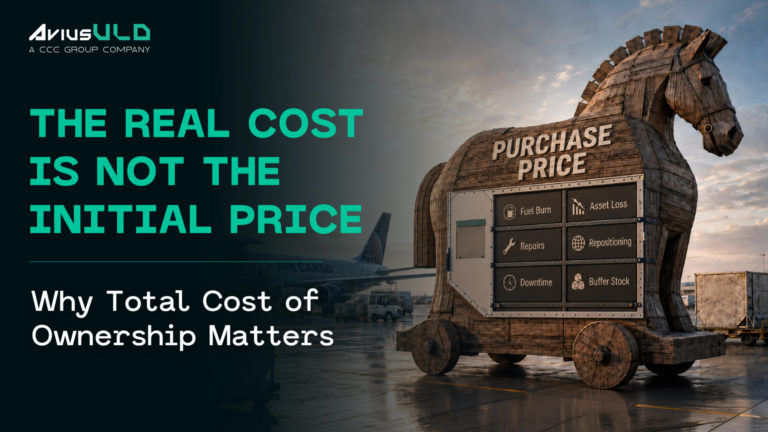
Total cost of ownership is an important part of this approach because it makes lifetime performance visible in commercial terms.
The purchase price is the easiest number to compare. It appears clearly on a quotation and fits neatly into a procurement spreadsheet. But an airline buys a ULD once and then carries, handles, stores, repairs, repositions and manages it for years. The costs that ultimately determine its value appear later through fuel consumption, damage, asset loss, downtime, excess buffer stock, maintenance administration and shortened service life.
The question is therefore bigger than what a container costs to buy. We need to understand what it costs the airline and the environment throughout its working life.
Around one million ULDs are in service worldwide, representing more than USD 1 billion in assets. IATA estimates that repair and loss alone cost approximately USD 330 million each year, before aircraft damage, delays and cancellations are included.
Endumax and the collapsible AKE solve different operating problems, but they follow the same principle. Endumax reduces the cost and impact of carrying the asset. The collapsible AKE reduces the cost and impact of moving it when empty. SmartULD reduces the cost of not knowing where it is or how it is being used.
That is why we see sustainability and total cost of ownership as connected. The goal is to engineer equipment that creates more value while consuming fewer resources throughout its working life.
Building the cargo solutions division
At the same time, CCE Group was expanding the range of problems AviusULD could solve.
CCE Group began in 2023 with AviusULD and Driessen Catering Equipment. Its mission was clear: to unite exceptional niche leaders into a global aerospace platform force while preserving what makes each unique.
Preserving what makes each company unique is essential. CCE Group was not created to absorb specialist businesses into one generalist organisation. AviusULD would remain focused on ULDs. Driessen would remain focused on catering equipment. Every company added to the group would retain the knowledge, identity and customer trust that made it valuable.
The advantage would come from connecting those specialists around the way airlines actually operate.
An ecosystem is more than a portfolio of companies or a wider product catalogue. It is a network of specialist businesses that share customer relationships, operational insight, technology, engineering knowledge and commercial access. Information gained in one part of the airline can help another company identify a problem earlier, develop a stronger solution or reach the right customer faster.
The companies can also combine capabilities when the customer benefits. A product developed in one business can support another. Technology created for cargo can solve a problem in the cabin. Customer feedback gathered by one team can inform product development elsewhere in the group. Airlines gain access to more expertise without having to build a new supplier relationship for every problem.
CCE Group began with two companies. Three years later, it has grown to five: AviusULD, Driessen, Trip & Co, Icebridge and InTech Aerospace. Together, they bring complementary capabilities across cargo, catering, cooling, digital systems and aircraft-interior maintenance and refurbishment.
Each addition follows the same principle: it must make the companies already in CCE Group more useful to customers.
For AviusULD, the acquisition of Trip & Co was a pivotal step in turning that ecosystem into a broader cargo solutions division.
AviusULD manufactures the load-carrying equipment, including containers, pallets and pallet extenders. Trip & Co manufactures the nets, straps, protective covers, thermal products and fire-containment solutions that secure and protect what that equipment carries. Their capabilities do not overlap. They meet in the same cargo operation.
A conversation about an aircraft pallet can quickly become a conversation about the net restraining the load, the straps beneath it, the cover protecting temperature-sensitive cargo, the risk of fire or the lack of visibility once the equipment leaves the airport. The airline sees one operation. Historically, it has been expected to coordinate several suppliers around it.
Together, AviusULD and Trip & Co form the core of CCE Group’s cargo solutions division. Airlines can coordinate pallet-and-net packages, product compatibility, delivery schedules, engineering input and customer support through a closer commercial relationship. The customer continues to work with specialists in each field, but no longer has to connect every element of the solution alone.
SmartULD adds digital visibility to that combination. The cargo solutions division can connect load-carrying equipment and cargo protection with information about location, occupancy, movement, environmental conditions and emerging safety risks. We can help carry the cargo, secure it, protect it and make more of the operation visible.
The wider CCE Group ecosystem creates another layer of value. Driessen’s work on lightweight and connected catering equipment, Icebridge’s cold-chain expertise and InTech Aerospace’s knowledge of repair, refurbishment and product life all generate insights relevant to weight, waste, asset management and operational reliability. The products remain different, but the lessons can travel across the group.
CCE Group’s expansion is part of the AviusULD transformation. It gives us access to more expertise, stronger relationships, shared insight and complementary capabilities around the ULD. Three years ago, AviusULD was one of two founding companies. Today, it sits at the centre of a broader cargo solutions division capable of solving more of the problems surrounding an airline’s cargo operation.
That is another step in our shift from equipment manufacturer to long-term cargo solutions provider.
From Equipment Manufacturer to Cargo Solutions Provider
Three years is a short chapter in AviusULD’s history. We did not create five decades of engineering knowledge in that time. We inherited it, along with the trust built through more than 700,000 ULDs delivered around the world.
The transformation came from using that foundation to build a different kind of company.
Ascend changed how we turn strategy into action. Fifty years of innovation became the foundation for a new generation of customer-led engineering. SmartULD changed what a ULD can do. Sustainability changed how we think about lifetime performance. CCE Group expanded the capabilities we can connect around the customer’s operation.
Together, those changes moved AviusULD beyond the traditional role of equipment supplier.
We still manufacture containers and pallets. That remains the foundation of the business and the source of our engineering credibility. But we no longer treat delivery as the end of our responsibility. We look at the full working life of the equipment and the wider operation around it.
It means reducing weight, fuel consumption and emissions; designing products that last longer, are easier to repair and create less waste; helping airlines locate and use equipment more effectively; detecting emerging safety risks earlier; developing products around real customer problems; and connecting ULDs with the products needed to secure and protect their loads.
Within CCE Group, the cargo solutions division gives that shift greater scale. AviusULD and Trip & Co connect the containers and pallets that carry the load with the nets, restraints, protective products and data needed to secure, monitor and manage it across the operation.
By bringing those specialist capabilities together, we can solve a broader range of cargo challenges while each company retains the expertise and identity that made it valuable. Customers gain a more connected solution without having to coordinate separate suppliers, products and information themselves.
Airlines will face growing pressure to reduce weight, fuel consumption, emissions and waste while improving equipment visibility, lithium-ion battery safety, product life and operational efficiency. They will also face problems that none of us can fully predict today.
We do not have a crystal ball, but we know how to listen, learn and adapt. Over the past three years, we have built the people, processes, technology and partnerships to respond as the industry changes. Three years ago, we set ourselves a North Star: to revolutionize the ULD industry. Three years in, that North Star has not changed.